
Is potassium sulfate worth the premium over potassium chloride?
Potassium sulfate can justify its premium when chloride exposure threatens crop quality, sulfur is needed, or a fertilizer formulation requires a low-chloride potassium source. For chloride-tolerant crops with adequate sulfur and suitable soil conditions, potassium chloride often offers better value. Paying more for potassium sulfate without identifying one of those needs can raise fertilizer costs without delivering a corresponding return.
For buyers, the decision starts with the destination of the fertilizer: which crops, which soils, which irrigation water and which application method. The useful comparison is the cost of supplying the required nutrients while staying within acceptable chloride and application limits.
Where the premium has a practical justification
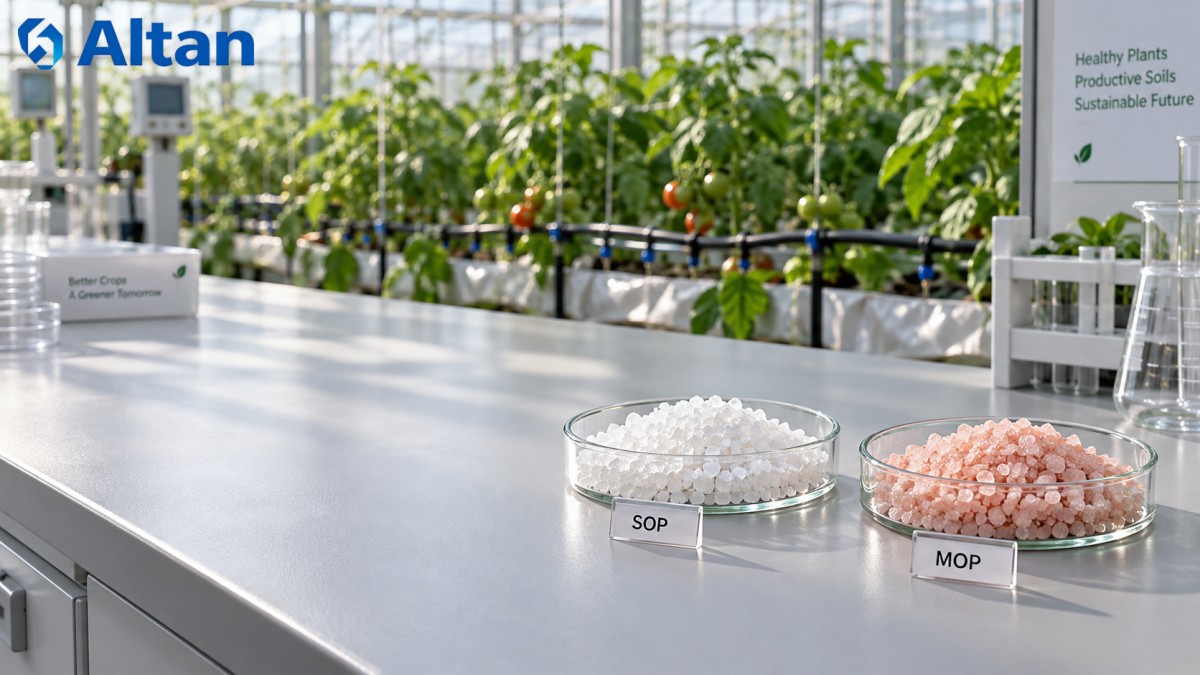
Potassium sulfate, also called sulfate of potash or SOP, supplies potassium and sulfur. Potassium chloride, commonly called muriate of potash or MOP, supplies potassium along with chloride. Both can meet potassium requirements; the accompanying nutrient or ion often determines which product fits the application.
A stronger case for SOP exists where chloride sensitivity affects the commercial result. For certain crops and production systems, chloride exposure can influence quality characteristics that determine saleable value. Tobacco is a familiar example; some fruit, vegetable and other specialty crop programs also warrant tighter chloride management. Crop name alone, however, is insufficient: variety, application rate, timing and growing conditions affect the decision.
Soil drainage and irrigation water can strengthen or weaken that case. Where water already contributes substantial chloride, or drainage limits salt removal, adding chloride through fertilizer deserves closer scrutiny. In well-drained soils with sufficient rainfall or suitable irrigation management, MOP may remain viable for applications that would be less suitable under restricted leaching conditions.
SOP still contributes soluble salts. Switching to it does not remove the need to manage fertilizer concentration, placement and irrigation, especially around seedlings or in protected cultivation.
Sulfur demand provides a separate economic argument. If the crop requires additional sulfur, SOP can replace part of a separately purchased sulfur source. That benefit becomes smaller when sulfur is already supplied through other fertilizers, irrigation water or soil reserves. Buyers should avoid assigning value to sulfur that the nutrient program does not need.
Compare the cost of the finished nutrient program
A quotation per tonne can obscure the difference in nutrient concentration. Commercial grades vary, and SOP generally contains less potassium, expressed as K2O equivalent, per tonne than MOP. The comparison should therefore use each offered grade’s guaranteed analysis.
Delivered cost per unit of potassium = delivered price per tonne ÷ guaranteed potassium content expressed as a decimal.
Keep the reporting basis consistent. Fertilizer specifications may express potassium as K2O equivalent rather than elemental potassium; comparing figures on different bases produces a misleading result.
Next, calculate the cost of each complete fertilizer program at the same potassium application rate. For the MOP option, include any separate sulfur fertilizer needed. For the SOP option, credit only the sulfur that actually replaces another planned input. Include freight, handling and application costs where the programs differ.
The remaining SOP premium must be justified by a practical benefit: meeting a chloride restriction, protecting a relevant quality characteristic, or satisfying a formulation requirement. A higher crop selling price alone does not establish that benefit. The crop must have a plausible response to the change in fertilizer source.
When the agronomic response is uncertain, a local trial comparing nutrient-equivalent programs can support a better purchasing decision. Quality measurements matter alongside yield if the expected benefit concerns grading, processing suitability or another saleable characteristic.
Make the specification match the reason for buying
If low chloride is the reason for paying more, the purchase specification should include an acceptable chloride limit. The name “potassium sulfate” does not mean that every commercial grade is chloride-free. Review the guaranteed specification and obtain a certificate of analysis for the supplied lot.
Application method also changes what constitutes a suitable grade:
- For fertigation: assess solubility at the intended operating conditions, insoluble matter and compatibility with the actual water and fertilizer mix. Concentrated sulfate solutions can form precipitates when mixed with calcium-containing fertilizers.
- For bulk blending: check particle size distribution and physical compatibility with the other blend components to reduce segregation during handling and spreading.
- For direct soil application: match the product form to the spreading equipment and planned placement.
A cheaper SOP offer can lose its advantage if it requires extra handling or performs poorly in the intended application system. Equally, a premium soluble grade may add little value to a straightforward soil application.
For a buyer serving several crop segments, a selective purchasing policy is often defensible: use MOP where chloride is acceptable, and reserve SOP for programs with a defined chloride limit, useful sulfur demand or specific formulation need. The strongest justification for the premium is a requirement that can be written into the nutrient plan and purchase specification.
Related Posts
- ▶ How to select plastic resins by melt flow rate for injection molding
- ▶ Is potassium sulfate worth the premium over potassium chloride?
- ▶ How to prevent caustic soda crystallization in storage tanks
- ▶ Choosing an NPK Fertilizer Ratio Based on Soil Tests and Crop Needs
- ▶ How to Reduce Ammonia Loss When Applying Urea to the Soil Surface
- ▶ Potassium Sulfate in Fertigation: Solubility and Calcium Compatibility
Send Us A Message